


Drying Up: What Record Low Danube Water Levels Mean for River Cruises
By Tom and Dom Travel | Updated: 31 July 2026

Tom and Dom exploring Vienna on board our VIVA Cruises river ship along the Danube
River cruising trades on a simple, enticing promise. You unpack your bags just once, glide effortlessly from city to city, and let the historic heart of Europe come to you. It is widely considered travel at its most comfortable and seamless.
On a recent journey along the Danube River, taken as part of an invited trip with VIVA Cruises, that classic promise was quietly tested. By the time we arrived in Vienna for our initial two-night stay, low water levels had already begun to disrupt sailings right across Central Europe. Ships were unable to pass through critical shallow stretches, itineraries were being reworked on the fly, and cruise lines had to adapt in real time. What had been sold as an uninterrupted sailing was quickly becoming something far more fragmented.
For cruise passengers, the reality of environmental impact becomes immediate the moment the itinerary changes. Our original plan did not unfold as expected. Sections of sailing were replaced with executive coach transfers, and passengers were swapped between sister vessels. The ship we had anticipated staying on could no longer navigate the shallow waters further along the river, so another vessel took its place downriver.
At first glance, this setup reads like a major disruption. It feels like a compromise on the classic river cruise experience. However, over the following days, it became clear that the reality was far more nuanced and rewarding.
Our Interactive Map of Our Itinerary
More from Tom and Dom Travel


Dom taking in the sweeping imperial views from the hilltop Gloriette at Schönbrunn Palace in Vienna
Vienna: Finding Extra Time in the Austrian Capital
In Vienna, the altered schedule unexpectedly gifted us extra time in one of Europe’s grandest capital cities. Rather than being tied to a strict, fleeting port call, the revised itinerary provided ample space to explore at a relaxed pace.
Starting at Stephansplatz, we took time to admire the soaring Gothic architecture of St Stephen’s Cathedral. The vibrant square surrounding the cathedral was bustling, but having extra hours meant we could step away from the primary tourist thoroughfares into quiet side streets, discovering independent cafes and historic courtyards.
The extended stay made a visit to Schönbrunn Palace far more enjoyable. Instead of rushing through the grand state rooms to catch an outbound ship, time seemed to slow down. We strolled through the vast imperial gardens, climbed up to the Gloriette for sweeping views of Vienna, and paused for a relaxed lunch without constantly checking the clock.
The experience felt far more considered and authentic than a typical whirlwind shore excursion allows.The Danube has always been subject to seasonal flow variations, but recent years have introduced a far greater degree of unpredictability. Extended periods of summer heat and reduced seasonal rainfall have made low water levels a regular occurrence. This affects far more than just individual daily schedules; it impacts the reliability of European river cruising as a whole. For an industry built on continuity, luxury, and smooth transit, shifting river conditions present an ongoing operational challenge.
What is less visible to the average traveller, however, is just how efficiently the system adapts behind the scenes.
Coach transfers, initially viewed by many guests as a frustrating necessity, quickly offered a completely different perspective on the region. Travelling by road through the rolling countryside revealed charming inland towns, vineyards, and pastoral landscapes that are completely missed when viewed strictly from the riverbank. The journey shifted from watching the world drift past a cabin window to actively moving through it.

Tom taking in the scenic Danube views from the top deck as our VIVA river cruise sails from Vienna to Melk
From Vienna to Melk and Linz: Navigating the River Stretches
Our voyage began with two nights in Vienna before heading along the river toward Melk and Linz.
In Melk, we marvelled at the breathtaking Benedictine Abbey perched high on a rocky outcrop above the water. The grand monastic architecture and vibrant yellow facade remain a standout highlight along the river route.
Continuing on to Linz, structured excursions were limited due to updated timing and schedule revisions. Far from being a drawback, this gap in the itinerary opened the door for genuine self-guided exploration.
Linz revealed itself as a fascinating, quieter counterpoint to the high-glamour imperial backdrop of Vienna. It feels noticeably less polished for mass tourism, but it is no less engaging. We spent our afternoon wandering through the expansive Hauptplatz, one of the largest enclosed town squares in Europe, before strolling along the Danube parklands. Without a rigid timetable to follow, the day was shaped entirely by curiosity. Stopping for a traditional slice of Linzer Torte at a local bakery provided a memorable personal moment that would not have happened on a structured tour group walk.
Returning to Vienna: Extended Exploration in the Capital
Following our time in Linz and Melk, the journey brought us back to Vienna for an extended three-night stay. When low water levels necessitate changes to sailing schedules, the silver lining is frequently extra time spent in key ports. Rather than a brief, hurried port call, the revised schedule provided ample space to explore at a relaxed, considered pace.
Starting at Stephansplatz, we took time to admire the soaring Gothic architecture of St Stephen’s Cathedral. The vibrant square surrounding the cathedral was bustling, but having extra hours meant we could step away from the primary tourist thoroughfares into quiet side streets, discovering independent cafes and historic courtyards.
The extended stay made a visit to Schönbrunn Palace far more enjoyable. Instead of rushing through the grand state rooms to catch an outbound ship, time seemed to slow down. We strolled through the vast imperial gardens, climbed up to the Gloriette for sweeping views of Vienna, and paused for a relaxed lunch without constantly checking the clock. The experience felt far more considered and authentic than a typical whirlwind shore excursion allows.
Get Your Free Printable Cruise Packing Guide
Take the stress out of preparing for your next sailing. Grab our comprehensive cabin checklist, tried and tested to make sure you never leave an essential behind.
You will also receive our latest honest ship reviews, practical cruise tips, and destination guides delivered straight from Tom and Dom to your inbox.
Whether it is your first cruise or your fiftieth, travel smarter with Tom and Dom. Unsubscribe at any time.

Dom meeting Bratislava's famous Cumil 'Man at Work' statue in the heart of the historic Old Town
Overland Adaptations: Győr and Bratislava
With river conditions remaining challenging further downstream, our planned sailing towards Budapest had to be adapted. While the ship could not make the full voyage into Budapest, VIVA Cruises did their best to ensure guests still experienced some of the iconic regional destinations originally planned by arranging land travel.
Boarding an executive coach, we journeyed into Hungary for a visit to Győr. The coach excursion allowed us to enjoy a whirlwind guided tour of this charming Hungarian town. Exploring its picturesque Baroque streets, colourful mansions, and quiet squares provided an authentic taste of Hungarian culture away from the major tourist hubs.
The following day, it was back onto the coach to cross into Slovakia for a visit to Bratislava. The city's charming old town offered delightful cobblestone streets, vibrant pavement cafes, and striking views up toward Bratislava Castle.
Throughout these stops, guided walking tours and rich cultural encounters continued seamlessly, proving that the heart of a European cruise lies in the destinations you explore, even if that movement is occasionally by road rather than river.
Sail with Us! Our First Ever Group Cruise 🚢
After years of sharing our adventures on YouTube, we’re hosting our very first group cruise, and we want you there!
Join us aboard Cunard’s stunning new ship, Queen Anne, for a 7-night Spain & Portugal voyage sailing roundtrip from Southampton on 24 October 2027.
Expect exclusive Tom & Dom Travel events, beautiful ports, and the chance to cruise with fellow channel fans.

Tom and Dom at Lisbon's iconic Portas do Sol viewpoint, with Queen Anne anchored on the glittering Tagus

Tom and Dom taking in the river views right from the French balcony of our comfortable cabin on the Danube
Embracing Flexibility in Modern River Cruising
Low water levels do not ruin a river cruise, but they certainly alter its character. The overall travel experience becomes less predictable, demanding patience and flexibility from both passengers and cruise operators. Cruising on dynamic waterways naturally highlights something that heavily controlled land tours often obscure: rivers are living, changing environments rather than fixed highways.
For river cruise lines like VIVA Cruises, managing changing water levels is an ongoing operational reality. Excellent communication and seamless land backup plans make all the difference in turning a potential failure into a fantastic journey. For travellers, it requires a simple mental pivot away from rigid expectations of perfection toward an embrace of travel flexibility.
The Danube did not deliver the exact itinerary that had been originally planned on paper. Instead, it delivered a richer, more spontaneous travel story. In an era of changing global climates, that adaptability may very well become an integral part of the modern river cruise experience.
Before you go... check these out next:
Frequently Asked Questions
1. What happens if water levels are too low for a river cruise?
When water levels drop too low for safe navigation, river cruise lines typically arrange luxury coach transfers to complete scheduled excursions. In some instances, operators switch passengers to a sister ship waiting on the opposite side of the shallow water stretch.
2. Do low water levels ruin a Danube river cruise itinerary?
Low water levels change the mode of transport for certain stretches, but they rarely ruin the overall holiday. Passengers still visit the planned cities, landmark attractions, and historic sites, often gaining extra land-based exploration time in the process.
3. What is the best time of year to avoid low water on the Danube?
Spring and early summer generally offer higher water levels due to seasonal rain and snowmelt from the Alps. Late summer and early autumn are more prone to lower water levels following long periods of dry heat.
4. How do river cruise lines manage low water logistics?
Cruise lines maintain dedicated land operations teams who coordinate alternative coach routes, alternative docking berths, and ship swaps in real time to ensure passenger safety and continuity of the tour itinerary.
5. Should I pack differently if my river cruise faces water disruptions?
Pack as you normally would for a river cruise, but consider bringing a comfortable day bag and walking shoes. If your itinerary incorporates coach transfers or day excursions between vessels, a small daypack makes land travel far more convenient.
About the Authors
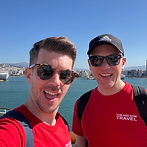
We’re Tom and Dom, the creators behind Tom and Dom Travel. Through our ship reviews, cabin tours, port guides, and cruise tips, we share honest, experience-led advice from our travels around the world. Everything we publish is designed to help you cruise with confidence.
Thanks for reading, and happy cruising.


